

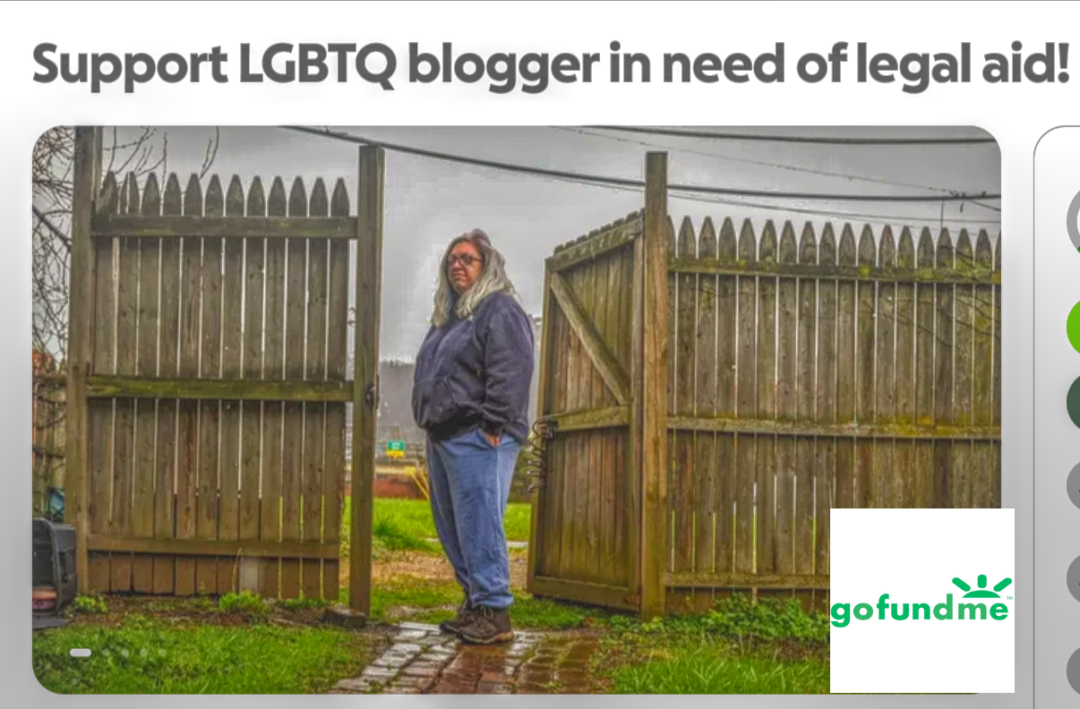
Recently, I asked some of the folx in my personal circle to help me with my ‘Living and Legal Expenses Fund’ by reaching out to individuals – their friends, family, coworkers, etc. It has been nearly three years of my asking my networks to help me with no end in sight. I’ve exhausted my networks. My folx and I did not see eye to eye. In part because I’ve been crowdfunding for over 15 years, it is hard for me to remember what it is like to make that first or second ask. I am considering how the algorithm works. To worry how people will react.
To know where and whom to ask.
I’m part of the Mutual Aid Facebook Group for the Pittsburgh Center for Disability Justice. People who contribute $10 or $20 each week accomplish impressive results. It is also humbling.
Our pet food pantry now works with nine mutual aid groups focused on distributing food. We deliver 10-20 bags of 3.5 pounds of food to each one. It has an impact even as such a small quantity.
I feel frustrated whenever folx say no. I don’t want to severe my relationships, but I have to pour my energy in my survival needs.
So I asked Opal from PCDJ to provide an overview, a primer of sorts, specifically about the most effective way to support people with mutual aid needs. I hope this will be helpful to anyone who is considering how to help people directly in their network, with or without a lot of financial resources.
Your Name: Opal M.
Your Pronouns: they/them
Your Affiliation: Executive Director, Pittsburgh Center for Disability Justice
Tell us about mutual aid.
Mutual Aid is collective action taken to directly meet the needs of our neighbors and community, without the barrier of formal systems and supports. Mutual Aid presumes that we, as individuals and neighbors and communities, are equipped to meet one another’s needs — that we not only do not have to but actually cannot in reality rely on formal systems and supports. Those systems are collapsing, underfunded, many are impossibly difficult to access. They are inadequate. Mutual Aid says : WE keep us safe. We survive TOGETHER or not at all.
Your organization/FB group coordinates crowdfunds and financial donations as a form of mutual aid. How does that work?
One of PCDJ’s four arms of programming is Mutual Aid. Within that program, we facilitate a group on FaceBook, a Discord server, and a Signal group. We also have a Care Closet program, and an internal Mutual Aid fund, but I will talk about the groups here. They’re called Disabled Pittsburgh Mutual Aid, and we are, to our knowledge, the longest running and largest Mutual Aid network in the state. We raise about 100k in small person-to-person giving per year. This means the funds raised never come to our organization, they are given from community members directly to other community members.
We have a group that functions so well, in large part because of the rules and structure we have in place, and because our members are so deeply engaged with the community itself.
What this looks like in concrete terms is that a group member has a need, let’s say that need is for a ride to an appointment. We do not try to refer them to systems, give them advice, or question them. Instead, people simply offer them a ride if they are able. Group members are able to do this without guidance or facilitation from PCDJ staff. The ride happens, and the group member gets to their appointment. Hooray!
Let’s say that ask is for money instead, a common need is help with rent. The group member would post about the need, the amount they are asking for, and their payment app information. Other group members then send them money directly, making a comment about what was sent. The person who needs the help keeps the post updated as people share what they have with them. With these asks though, there is often a shortfall from the group itself, and so PCDJ staff encourage group members to share the asks weekly in their own networks. In this way, from people sharing financial asks outside of social media, those needs can be filled. Rarely are needs over 200.00 met without many people sharing the asks outside of social media… but when many people do this critical work, we have seen several thousand dollars raised in 24 hours.
What if I post on my FB page or other social media account askingpeople to donate? Why isn’t this effective?
Posting a financial ask to social media is a great first step! It it low stakes, and allows us to practice feeling uncomfortable and doing the thing causing discomfort anyway.
However… unless someone has a huge following, and is also direct in specifically asking them for a concrete thing (ie if you have 5.00, I want you to stop what you are doing right now and send it to xyz), then sharing asks on social media has limited results in our modern landscape. There are other ways to try to address this, such as tagging specific people in posts or comments and asking those people publicly to contribute, but most people feel less comfortable with these tools.
One reason is that algorithms simply do not show posts that contain external links, pay apps, and many common words to friends and followers. Words like ‘money’, ‘dollars’, ‘PayPal’, ‘giving’, and even ‘Mutual Aid’ are suppressed purposefully. Trying to get traction on a post is extremely difficult, because the words ‘bump’, ‘like’, ‘share’, ‘commenting’, ‘visibility’, ‘react’, and ‘boost’ are weighted the most negatively in algorithms currently.
If for some reason a post goes viral, then it is suddenly very visible on all platforms. When this happens, very large financial needs can be met very quickly. This distorts the perception of users, leading them to believe that fundraising via social media is a viable tool. It is an illusion though, much like playing the lottery.
Generally, people with 500 or fewer followers posts asking for donations will be shown to fewer than 15 friends or followers. It takes many, many people sharing an ask in this way to get a need met. It is slow, tedious, demoralizing work that rarely results in needs being filled.
What’s the worst that can happen if I contact people directly with an ask?
Well, realistically the worst thing that happens is that someone says no. Usually, people are not unkind about that. Sometimes, someone becomes upset or angry with being asked. Even when someone is upset or angry, the worst they do is verbally express their feelings. Then we have the opportunity to apologize, and we know not to ask this person in the future.
It is so scary, legitimately scary, for the first couple of dozen times when we start to ask others for donations. it gets so much easier with practice. Most people report that the fear fades pretty quickly just with practice!
I care about this cause and person, I want to help. But asking people for money makes me uncomfortable. How do I get past that?
There are things call ‘distress tolerance skills’. If you look up that phrase on the internet, you can find a whole slew of great resources about the concrete, practical things we can do to get through challenging things.
I would also say to nearly anyone — you can do hard things! I know you can. You probably do hard things all the time. What helps us do hard things is so individual, take a few minutes to stop and think through a time that you have done something while you were scared. Maybe you have gotten a vaccine when you are afraid of needles. Maybe you have given a presentation when you are scared of public speaking. Maybe you have gone into public with a haircut that you weren’t happy with. How did you do that? What allowed you do complete the task while you were scared or uncomfortable?
How can the underlying tools you used in those circumstances apply to asking people for donations?
If someone thinks that they don’t really have a network. What are some spaces in their life where they could sk?
Most of us have more connections that we realize! Think about the things you do. Are you a member of a gym? A book club? A gaming group? A discord server, a religious body, a volunteer gig? Do you have children in school, does your spouse have a hobby group, do you play a sport?
What about the people closest to you, does your father play golf or have a barber shop crew? Is your sister a knitter with a sewing circle? Is your best friend part of a running club?
It might be useful to physically diagram or list the things you do with other humans, and the things the people closest to you do. Then think through how you are connected in those spaces.
Is it effective to ask my family and friends directly to contribute because I asked, even if they don’t know the person? Why or why not?
This is important — the most effective way to gather donations for anything is to directly ask your friends, family, and resourced people you know.
The GoFundMe campaigns that are successful are so because of only two reasons. The first and biggest is that people connected to the campaign are all directly asking their friends and family, not just sharing on social media but sending their parents and siblings and best friends a text message and asking directly ‘hey can you help this person? They are important to me’. The second is that the campaign goes viral, but that is a vanishingly small number of campaigns.
The same is true for Mutual Aid fundraising. When people directly ask in person, via email, via text, for the people they know to give 5.00, they nearly always do. When they ask more resourced people to give 50.00, they nearly always do. And, sometimes when a need is urgent, and they are asking very well resourced people, they are more than happy to give 1,000.00.
That does not happy from sharing links on social media. This only happens when we ask directly, concretely, person to person.
Think about it this way. If your friend, child, parent, sibling, or coworker asked you for your help with something — let’s give a concrete example here, they text you and say ‘Hey! This person I am connected to is in a tough spot. I know you care about people remaining stably housed… I wanted to ask if you have 20.00 you could throw our way to help them make their rent and stay in their apartment. It’s ok if you don’t!’ — how would you feel? Would you be offended? Angry? Probably not!
Most of us feel neutral at worst about being asked. Even when we don’t know the person, we may or may not give. If we have 20.00, we probably will though, simply because someone we know asked us. It feels good to help! People like being helpers!
What happens when you wear out your network?
This is a great question. We do have to be mindful of a particular well running dry so to speak [NOTE : this is a poor anology but I cannot think of a different one, feel free to cut or change it to a different one that is less clumsy]
The way we avoid this is by building larger networks, and encouraging those within our network to broaden what ‘network’ means as well. When we all do a little, no one has to carry too much.
To answer more directly, what happens is that donations start to ebb, until they become a trickle of what they once were. Often, they stay at that trickle. That means that people’s critical needs, their fundamental basic needs, go unlet. People quickly become street homeless. People quite literally die without the supports that our mutual aid network provides [NOTE : I have real workd examples of people dying due to lack of access to basic necessities, here in Pittsburgh, my own clients. I can give them if you think it would be helpful, but it is grim and difficult to engage with]
This type of mutual aid feels like back in the day when someone would pass a basket or hate to help a neighbor with a need, then pass it again the next week for someone else, and so forth. Or gifting someone with cash at a funeral of a loved one. Or even when the ladies in my neighborhood would go door to door collecting donations for a sick neighbor or another emergency. Does that resonate with you?
Oh absolutely. We aren’t doing anything new or fundamentally different here, in spite of the new terminology. Passing the hat is within our own lived experiences, but things like borrowing a cup of sugar, or sharing childcare responsibilities so as many people could attend to the harvest as possible, or even sharing of that same harvest are all as old as human civilization. Collective care, community care, mutual aid — these are all the same premises. We simply have the ability to connect with exponentially more people today than we ever have before.
At PCDJ we live by three ethos. One of those is ‘We survive together or not at all’. We are none of us an island. Humans are incapable of survival alone. The uniquely American myth of rugged individualism is just that — a myth. A lie. Something told to us so that we become disconnected from one another, from our collective power, and instead labor endlessly for the profit of what amounts to our lords/the landed gentry.
Scarcity is not real. There is enough for all of us. It already exists. We can meet our own needs, regardless of what we have been force-fed by the billionaire class.
Another analogy is when parents bring the order forms to work for the school stuff – hoagies, candy, magazines, wrapping paper, Girl Scout cookies. You buy a $10 hoagie that you know won’t be tasty or candy bars you don’t really want to be a good colleague and support kids. Is that the same thing?
This is a similar thing! It is not exactly mutual aid, but the principals underlaying it are similar. The skills we use to do the asking are exactly the same! When we ask out collogues or book club members to buy that candy bar? They will react the same way when we ask them to donate 10.00. People love Girl Scout Cookies, but do we really want 5 boxes? Or do we want to help the troop, and to help fund their activities, and the cookies are a fun bonus?
Do we have an obligation to participate in mutual aid?
This is an interesting question. The concept of ‘obligation’ carries a certain connotation in the US. It means carrying weight. Removal of autonomy. Duty, but with a splash of unwillingness. Obligation, even desired and chosen obligation, carries with it a kind an onus. Something required of us.
I reject that framing of ‘obligation’. I feel that I do have a duty to care for other humans to the best of my ability. I feel that all humans desreve basic things (food, shelter, education, health care) merely by dint of being alive. I feel that it is my obligation, my duty, my honor, to work to meet the collective needs that all of us have.
Again, we survive together or not at all. It may sound naive or Pollyanna of me, but I believe that phrase with all of the stuff that makes me. To the marrow of my bones.
Does that mean I am ‘obligated’ to participate in mutual aid? Well, I believe that I am.
I believe that all of us are.
But my meaning of obligation may be different than most others’.
What are some examples/situations where mutual aid asks were successful?
I have thousands of examples right here in our own area. In our network, people are directly meeting the needs of others every single day in so many ways.
One example that may seem silly is that a full time non-ambulatory wheelchair user may be unable to change an overhead lightbulb in the home that they own. This happens at least a few times per year in our group. Someone coming to change their lightbulb, or the batteries in their smoke detector, is successful mutual aid.
A Deaf community memeber who needs assistance to make phone calls, who asks for that assistance and then someone shows up to help, that is mutual aid. That happens a few times per month.
People ask for things like a spare dog leash, a ride to an appointment, help filling out paperwork, even things like help with household chores everyday in our group. Most of these things are immediately taken care of. Lawn mowing, snow shoveling, dog walking while someone is ill.
Some more ‘impressive’ examples are raising 6,000.00 in 24 hours to save someone from eviction. Once an eviction is on someone’s record, it becomes damned hard for them to *ever* rent again. The general public does not understand what a huge, insurmountable, issue eviction is to overcome. We support a dozen people who live in homeless shelters simply because they are unable to find housing that meets their basic needs (on decent public transit in an area with sidewalks for full time wheelchair users is a common example) due solely to having an eviction on their record. And so, we worked hard to meet this need, to avoid this eviction. The community member that we raised these funds for is currently stable and well, thriving, and works hard to raise funds for others.
What are some examples of what I could say when I ask people to donate?
‘Hi friend! I’m hoping you can help me with something. A community member is on the verge of eviction and needs 500.00 more to remain housed. This person doesn’t have any safety net, they’ve exhausted all programs, and this is urgent. Im’ helping a local group raise the money to keep them in their home. Do you have 10.00 you could send this way? No pressure if you don’t have it!’
‘Hey Uncle John! You know that group I talk about sometimes? We’re raising money this week to meet some basic needs for our neighbors. Do you have 20.00 to spare?’
‘Hey book club fam! I’m helping to raise money for very basic needs for some local families. I’m hoping some of you can by sending some donations my way! Anything helps. Our goal is 2,500.00 this week, it’s a big number but if lots of people help we’ll keep some families housed and their lights on. All the social resources have already been exhausted for these folks. Thanks y’all, I know we all care about this stuff here!’
Anything else to add?
I think the only other thing I’d say is that it’s ok to step in now. You don’t need to wait until you know more, or feel more confident. It’s ok to learn and do at the same time.
Thank you, Opal.
Discover more from Pittsburgh Lesbian Correspondents
Subscribe to get the latest posts sent to your email.




You must be logged in to post a comment.