
The first Pride Night at PNC Park was 22 years ago. That’s time for a lot of reflection.
Name: Patrick Joyal
Pronouns: he/him/his
Role with the Pirates: Director of External Affairs
Please tell us about something not well-known involving the Pirates—something we should know about or explore, something to be proud of.
One piece of Pirates history that deserves more attention is that, to our knowledge, the Pirates were the first of Pittsburgh’s major professional sports teams to plan and host a Pride Night in 2004. We’re proud of that moment of regional leadership, and even prouder of the Pride celebrations, partnerships, and conversations that have continued in the 22 years since.
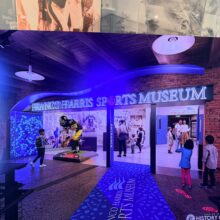
Our commitment to Pride is part of our larger goal to be affirming, inclusive, and welcoming to all our neighbors. In 2025, we produced our first live Spanish-language game broadcast as part of our Roberto Clemente Day celebration. In 2022, Caitlyn Callahan became the first woman to serve as a uniformed coach in Pirates franchise history. In 2021, we opened a Sensory Room at PNC Park to better support fans with sensory sensitivities. And in 1971, the Pirates fielded the first all-Black and Latino starting lineup in Major League Baseball history.
Across language, race, disability, sexual orientation, and gender identity, our focus has always been to widen our circle.
The Pirates are once again hosting ‘Pride Night at PNC Park’ to honor Pride Month and the regional LGBTQ community. Why is the franchise invested in this event?
All our neighbors should feel safe, supported, and welcome at PNC Park. Pride Night is one way we choose to live that commitment: by creating a space where LGBTQIA+ fans, families, employees, and allies feel seen, affirmed, and invited to enjoy Pirates baseball.
We believe that our home ballpark should truly feel like home for everyone. We are proud to work alongside community partners and friends to discuss logistics, provide feedback, and plan a truly memorable night at the ballpark.
A weeks-long planning process involves the team and community organizations. We discuss logistics, provide feedback, and address concerns. Is this typical for your major ‘Night at PNC Park’ events? How has the dialogue shaped your own understanding of community needs?
We recognize the importance of intentionality in the Pride planning process, and a critical element of that is bringing community voices into our conversations. With their guidance, we’ve found that our programming has become more thoughtful, welcoming, and authentic.
Their feedback hasn’t just shaped this program; it has helped make us better event hosts, stronger civic partners, and good neighbors throughout the year.
Perhaps most importantly, community dialogue has shown us that Pride Night can’t simply be an event we plan, host, and move on from. We should carry that spirit of affirmation, joy, and hospitality throughout all we do.
The Pirates do offer financial sponsorships funded in part by these ticket sales. What percentage of your giving is invested in the LGBTQ community?
Through Pride Night and other avenues, we’re proud to have directly supported several important LGBTQIA+ community organizations, including: The Three Rivers Business Alliance, Pittsburgh LGBTQ Charities, the Hugh Lane Wellness Foundation, the Persad Center, Proud Haven, and the Kelly Strayhorn Theater.
There is something wholesome and safe about a hometown major league team embracing and celebrating the LGBTQIA+ community. It feels very baseball-ish and very Pittsburgh. What does this event mean to you from inside the organization?
There is real significance to celebrating Pride at PNC Park, our home ballpark.
That comes from our belief in Pirates Baseball as a community builder, and from our recognition of the responsibility we have to all our neighbors: to actively build a sense of community.
But the most powerful reason may come from the fundamentals of the game itself, because at its core, baseball is about coming home.
Pride Night reminds us of what “home” should mean: being seen, respected, and welcomed for who you are. That is the type of space, and the type of feeling, we hope Pride Night creates.
Ultimately, we want all our fans, especially our LGBTQIA+ neighbors, to know — in words that often accompany baseball’s most exciting play — they are safe at home.
I have a unique point of view – I was part of the very first Pride Night at PNC Park in June 2004. In 2022, I threw the symbolic first pitch for Pride Night. For the former, we were in the bleacher seats way out in the field. For the latter, I was standing on the pitcher’s mound. Both remain core memories for me. I also helped the team contribute a video to the It Gets Better Project in 2012. My life as a LGBTQIA+ person has been profoundly altered by the Pirates. What type of feedback have you received from other community members over the past 22 years?
Feedback around Pride Night is crucial for us. It helps us understand how we can better welcome and support LGBTQIA+ Pittsburghers throughout the season while also strengthening the Pride Night experience itself.
Through these conversations, we’ve learned that real visibility is essential to LGBTQIA+ fans to feel welcomed, accepted, and seen at PNC Park. That’s why we’ve made a point of scheduling Pride Night on dates that can draw larger crowds, including weekend games and matchups with high-profile opponents. A full ballpark broadens awareness and support, and it sends an important message: Pride deserves a prominent place on our calendar.
We’ve also learned that Pride Night is about more than the game itself. Pairing the event with postgame fireworks, inviting LGBTQIA+ organizations to share resources, and building in moments of recognition throughout the evening have all come directly from listening to our community partners.
Ultimately, this feedback is what makes our Pride Nights – and us – better. Our goal is to keep listening so that LGBTQIA+ Pittsburghers, whether they are attending for the first time or returning year after year, feel seen, connected, and celebrated. This is more than a one-night-a-year commitment. You provide year-round training to your staff with the Hugh Lane Wellness Foundation. What are some other initiatives?
We’re proud of our partnership with the Hugh Lane Wellness Foundation and see it as an integral part of our commitment to being intentional, affirming, and connected to LGBTQIA+ Pittsburgh.
One important piece of that work is Out @ the Ballpark, our internal LGBTQIA+ employee resource group. The group creates opportunities for employees to connect with one another, support local organizations, and take part in service projects with partners like the Persad Center and Hugh Lane. Out @ the Ballpark also leads our annual Spirit Day employee event, which itself includes a supply drive for Hugh’s Kitchen and helps organize the team’s presence in the Pittsburgh Pride Parade.
Additionally, we stay closely connected with MLB staff to learn best practices and share ideas on how we can make our workplace and our ballpark more inclusive. That includes collaboration with MLB Social Impact through initiatives such as The Billy Bean Fellowship and the Curt Roberts Step Up to the Plate program.
For us, our commitment to affirmation hinges on consistency. Pride Night itself is important, but our larger go is to consistently build relationships, support employees, learn from partners, and ensure LGBTQIA+ Pittsburghers know they are welcome and valued throughout the year.
In years past, we discussed the milestones of professional athletes identifying themselves as out LGBTQ community members at all levels and leagues, professional and amateur. Culture has shifted dramatically in the past few years to where we now use sports as a reason to segregate and isolate, not to play. Why are sports such a flashpoint?
Whether played or watched, sports – especially in Southwestern PA – are where so many people first feel a critical sense of belonging. That’s exactly why exclusion from them, in any way, is so painful: it cuts people out of a widely experienced sense of community.
We believe that baseball is for everyone and recognize our responsibility to live that belief, by ensuring the game remains safe and accessible for everyone who wants to experience it.
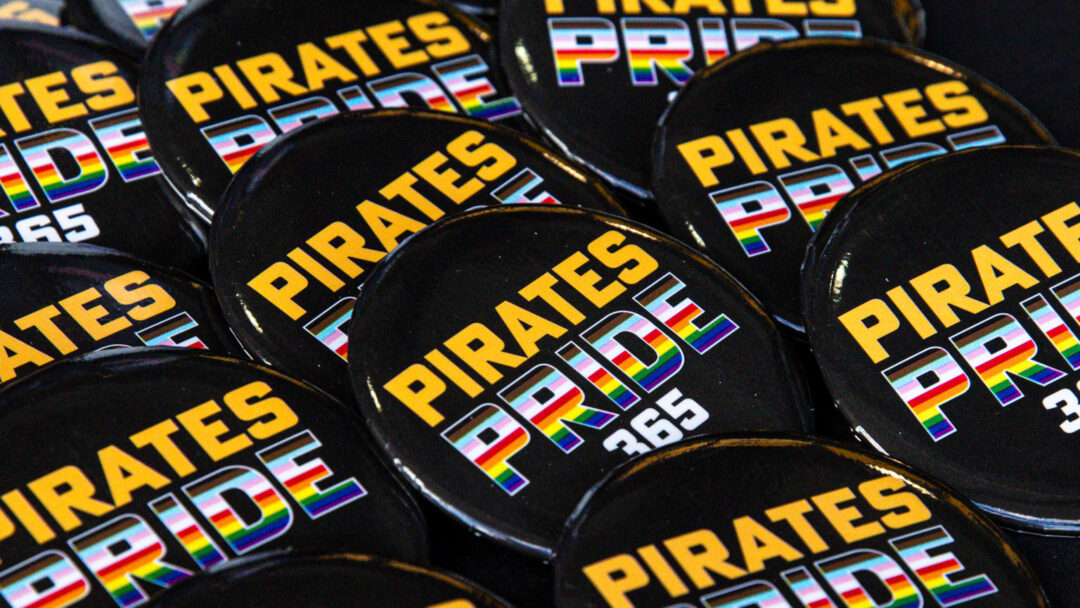
The team has occasionally distributed pride swag at these games. Last year, the team distributed a small Pirates pennant featuring a progress pride flag. Mine sits in my pen cup. A few months ago, I was tabling at an event for pet rescuers. When we arrived and asked about our table, they said, “Oh, you’ll know.” Sure enough someone had put a few of those pennants in a welcoming arrangement at our table. It was very sweet and very moving. Other people have donated them to our organization. My youngest nibling has one in his room. It has that powerful impact that I felt when I had a Pirates banner up on my bedroom wall in the late 70s. I still have probably every PNC cup I ever bought, crammed somewhere in the kitchen. These symbols are very important. Does that resonate with you?
Absolutely.
We know that it’s a privilege to have a team symbol woven into someone’s daily life – inspiring them, comforting them, or giving them a sense of belonging.
I was reminded of that on a recent trip to the grocery store. Checking out, I noticed the cashier had the same Progress Pride pennant you described taped to the side of their station.
Nothing required them to bring the pennant to work. They chose to. Its meaning resonated with them so much that they kept it displayed in a public spot, a backdrop to hundreds of interactions with customers.
That’s a powerful and humbling realization. When someone places that much trust in what we stand for, it’s our duty to live up to it.
This year’s plan looks great – a portion of ticket sales from the dedicated link will fund LGBTQIA+ projects, great music choices, a flag unfurling on the field, and fireworks! What’s your favorite part?
As someone who has spent much of my career in public service — and as a lifelong Pirates fan — seeing community members unfurl the Progress Pride flag on the field always gets me. I love the symbolism, the visibility, the sense of community, and the energy of that moment.
What can we expect from future Pride Nights – perhaps a concert with a fan favorite LGBTQIA+ headliner after the game? A drag version of the pierogi race?
Pride Night should keep growing with the community!
We’re always open to feedback, and we look forward to continuing the community conversations that help make future Pride Nights joyful, creative, and reflective of LGBTQIA+ Pittsburgh.
What is your personal message to trans and queer youth right now?
You deserve to be safe, supported, and free to be fearlessly, authentically yourself. No trans or queer young person should grow up without knowing that, or without easy access to real-world examples of it in action.
We hope Pride Night and all our partnerships with LGBTQIA+ partners remind you of that.
We’ve got your back.
Finally, what’s your own walk-on music for Pride Night?
I’m not a player, which would deeply disappoint six-year-old me, so I don’t get to have walk-on music.
But if I did, it would have to be “We Are Family” by Sister Sledge. Pirates history. Pride energy. What’s not to love?
Thank you!
Get your tickets for the 2026 Pride Night at PNC Park.
* * *
Discover more from Pittsburgh Lesbian Correspondents
Subscribe to get the latest posts sent to your email.


You must be logged in to post a comment.