
Here Come the Police
Last night, a friend stopped by with some meals for me. I jumped in the car with her to avoid the torrent of rain. She was parked behind my house in an alley, but under a streetlight.
We chatted about our days, caught up on assorted things. It was maybe 20 minutes.
As I was preparing to exit the car and dash through the rain to my home, it happened. A police cruiser turned onto the alley and slowly made its way past us. Time stood still for me. I caught myself holding my breath, saying over and over “they are not here for you.” My friend knew what I was experiencing and asked what she could do.
She reminded me that we weren’t doing anything illegal at all. That if they asked her to explain her presence, she would and probably end up charming them. She was comforting me “I’ve got this, you are safe.” I felt anything but safe, I was trembling.
When I close my eyes, I see them pulling off the main drag onto the alley and slowing down. Slowing down is a natural choice in that scenario, but it felt menacing and intimidating. I instantly went to a place where I feared a confrontation, I remembered being locked into the back of a similar vehicle two years earlier.
The police slowly passed us and pulled into an empty lot. That struck me as odd. Anyone up to no food would not sit under a streetlight. Was something else happening on our block that might pose a threat? Were they taking a break or a nap? I know all the zones are understaffed so surely there were better places of actual crime than this little relatively pastoral nook for our limited police resources.
The Trauma Caused by Law Enforcement
But the possibility, not the probability is the factor in trauma. It had happened before that a police cruiser stopped unexpectedly, handcuffed me, and take me away against my will. My privilege as a white woman probably mitigated the worst of it, but it was still awful. I can grasp context of privilege while still acknowledging the harm done to me.
That’s the thing with trauma – the old wounds that have not yet healed merger with the current circumstances. I’m not just bringing the memories of the police violence I experienced, they are active parts of each present moment as my mind struggles to process like a typical person would. I am actively back in those earlier events while navigating the current one. It takes a lot to not succumb to despair.
After the cruiser drove past, my friend asked if I wanted to go into the rear or front exit of my house. I opted for the front so she drove me around and watched me go in as all of my friends do these days. She texted me a bit later to check in.
I felt quiet, disturbed that they can still get to me like this. I had all sorts of buffers, but I still felt this deep abiding fear that they were going to get me and take me away. The sort of fear you experience as a kid, but based on that fact that they actually did.
My trauma therapist and I have visited this a few times. Finding a modality to treat the trauma is tough. Exposure therapy is not an option – I can’t very well get closer and closer to a police car without arousing suspicion. I can’t get into a car for therapy sake or touch a pair of handcuffs. Even typing that fills me with anxiety.
Acknowledging My Privilege As a White Woman Interacting With Police
Over the weekend, some cops were directing traffic at an event where I had to park. My instinct was to turn around and drive away, but I needed to park for the event and my friend was riding with me. When I leaned out to get instructions, I intentionally spoke to the civilian with a clipboard while keeping an eye on traffic control cop. I used my tools. I got through it.
But I noticed it. And before I would not have. Before I mistakenly thought the police would protect me, knowing a lot of that was being a white middle class middle aged person. Until the #decommitment weekend, I had never experienced a police officer laughing in my face and threatening to arrest me if I called 911 again, mocking me when I spoke up for myself based on what a police sergeant had told me. That was pretty shocking.
It woke me up to the reality that policing itself is the issue as much as the police officers who abuse their authority. I won’t dive into a defund the police mantra here, but I can humbly admit that it had to happen to me to really understand it. And, yes, my experience was far less traumatic than for my BIPOC neighbors. And, yes, it is sobering to realize how awful that must be given how awful this was. It is not the same at all, but it emanates from the same broken law enforcement institutions.
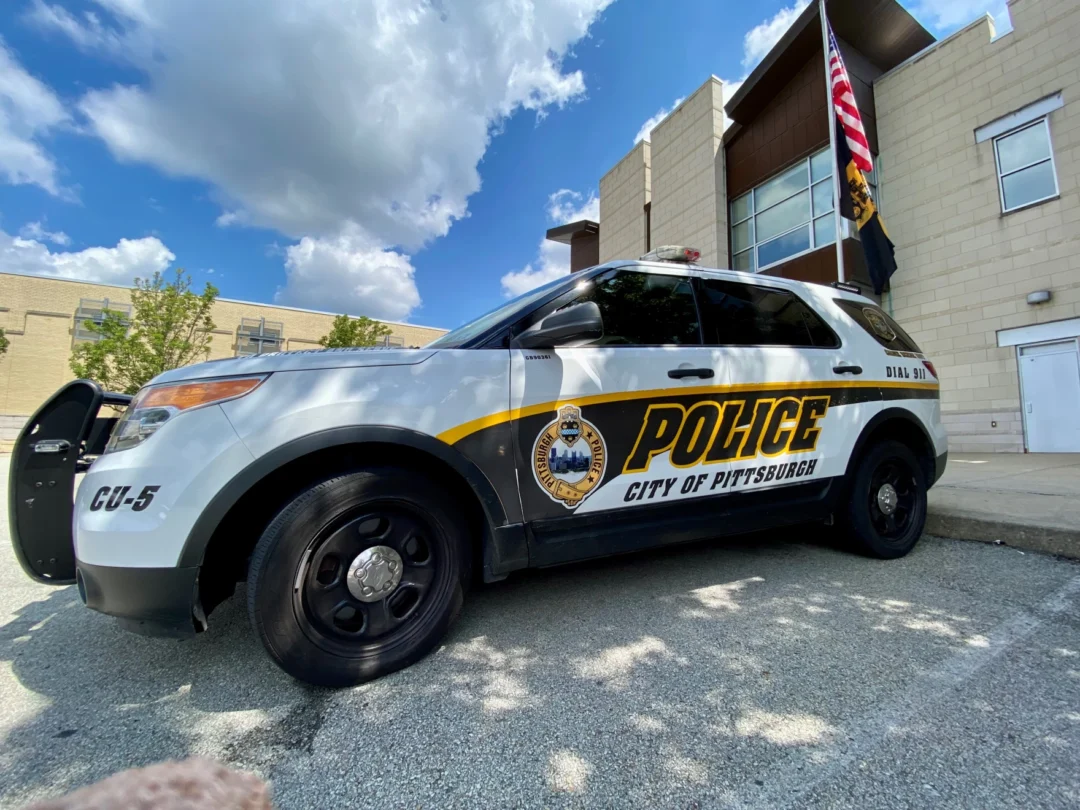
And What About Potential Traumatizing Encounters With the Police
So it is really three sets of events – one, the execution of the warrant obviously; second, the cop responding to the domestic 911 call treating me clearly differently than he treated my wife, and third,all of the ensuing contacts as I tried to return to my home. The small humiliations, the disdain, the decision to do the opposite of what my lawyer said they should do. Even my attempt to report misconduct was never addressed.
I have thought about this before as I am driving around a large neon orange tricked out Land Rover Defender covered in Spanish language stickers from previous rallies. When I saw the story about the woman in California who intentionally put a Mexican flag sticker on her bumper to draw police attention to her and away from other people, I thought “wow, cool.” The next moment I thought about my vehicle (it is a loaner) covered in Spanish language stickers with all sorts of flags and imagery.
My heart dropped as I realized I might be a more high profile target for a traffic violation than a typical person or when I drove a more typical car. I started to worry how I would handle that situation without giving them a reason to detain me. Normally, it would just be exasperating. But in Gertie registered to Oklahoma with ownership documents from another person? There are multiple secret compartments filled with cat food. Can I reject a request to search my car? What do I do to keep myself safe as a person living in this horrible time, but also as a person who has police trauma?
What would I do to protect myself? I know they wouldn’t find anything except cat food. I know that even if they towed away Gertie, her owner would deal with it. I know that he would also show up for me (he’s a lawyer) and I have lawyers already.
But what would happen? What if I was scared or frightened or having flashbacks to both my own experience and the countless videos of law enforcement kidnapping American citizens? What were my rights? I have nightmares about being dragged in handcuffs to a police vehicle. How would I manage this potential scenario?
Where to Get Good Advice
I asked some people – what I got was a lecture on not centering myself in scenarios that target BIPOC folx and immigrant families. My fears based on my mental health and my actual lived experience were just wiped away – “Go ask a lawyer” – even as I acknowledged the difference and yet, the probability that the circle will tighten to target homeless folx, people with disabilities, queer people, etc. I could not ask my questions in spaces focused on dealing with law enforcement because I was disrupting the narrative.
So I did ask a few lawyers. One told me to talk about cats to make the police think I’m a silly white woman and leave me alone. The others just didn’t respond. So I still don’t know how to manage this situation. I’m still asking questions, but people who aren’t trauma informed don’t understand the core of my fears.
Another thing I lost in all this – the person I trust most in this world to guide me is a lawyer who would have given me informed advice. But they initiated the chain of events that led to this trauma.
The Impact of This Trauma on Me
I am afraid of the police, especially when they are in cars. It has been two years and I can’t shake that trauma response. It is debilitating because I can’t avoid crossing their paths so I find myself staying home even more than usual. That is very frustrating because I care about my neighbors and I care about my own rights. Our country is falling apart and I cannot show up as I would have years ago. I’m left on the sidelines and it is frustrating and demoralizing.
It also limits my ability to document events from the LGBTQ+ perspective in this 20 year archive. That’s a loss for all of us. I’m not saying my perspective is the only one that matters, but it is historically relevant.
I live on a main drag in the Northside, just a mile from Zone One HQ so I see a lot of police cars along with other vehicles with sirens and official stickers. So I keep the blinds closed. If I do see one, I use my trauma tools.
And I weep because until we can process this, I’m stuck in a cycle of fear and anxiety. But we are processing something else right now, something also very important perhaps more so.
Let Me Remind You
My law enforcement trauma cannot be compared with what BIPOC and immigrants or their descendants are experiencing right now. I understand my chances of being pulled over for any reason are automatically lower. And that I make a choice to drive the Spanish language sticker covered vehicle.
But my trauma is real and it is debilitating. And it reminds me that there’s an inevitability that law enforcement will turn on all of us – first the most oppressed such as the homeless, the poor, queer folx, and people who are charged with minor crimes. But we know that in an authoritarian state, the need to suppress dissent spreads as does the inevitable power craved by people with guns and badges. They are furious that their current power is being challenged and in a profession that thrives on dominion over others, that creates frustration and pent up resentment. Not a good mix with guns and badges.
I probably won’t go to the next No Kings rally on October 18. But I do need to go out in the vehicle I have at my disposal to live my life while managing all of this trauma.
Eventually.
Do everything you can to resist authoritarianism and the destruction of our civil rights. Not because it (will) might be you one day, but because it it the right thing to do. Our individual traumatizing experiences can’t be compared with 1200 people disappearing from Alligator Alcatraz. But they stem from the same violent structures in our capitalist society.