
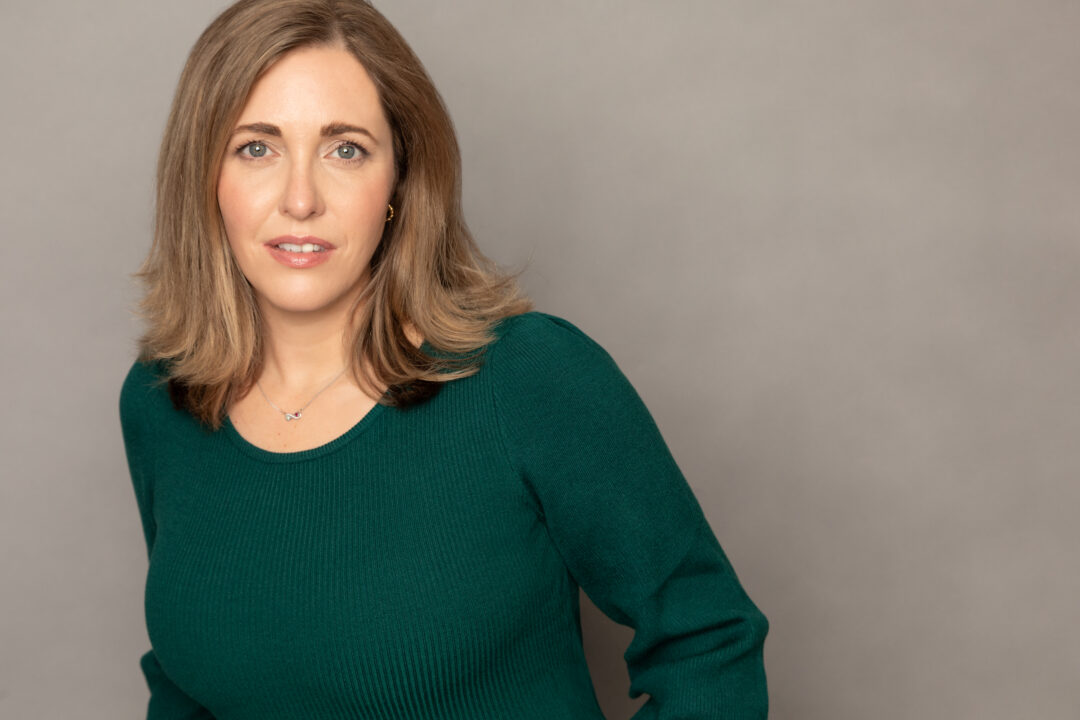
In our reconstituted Q&A series, Seven with Sue (+1), we are exploring the local arts scene. We customize the questions for folx in various parts of the arts community.
I received an email from Jeremy Mikush about an upcoming show Divas Survival Guide, happening in two fridays at the Historic Carnegie Free Library in Carnegie, in the Studio Cabaret space on Friday, August 21. We are two native Pittsburghers sharing stories of growing up in the Mon Valley, connecting to musical theater, with laughs and stories to share for all Pittsburgh showtunes and cabaret lovers
So I asked both Jeremy and Michelle to participate in this Q&A series.
Note: post has been edited for length and clarity
Name: Michelle Tibble
Pronouns: She/Her
Your Affiliation with the Arts: I’ve been a professional actor for more than 20 years, with much of my career rooted in Pittsburgh and Chicago.
How do you describe your identity?
I am what you might call a cisgender, straight, boring-ass white lady, married to a cisgender, boring-ass Midwestern man. We have kids, a dog, and a pretty wonderfully unconventional division of labor.
Honestly, I’ve never spent much time overthinking my pronouns, sexual identity, or gender category.
That said, I absolutely understand and respect why these categories are important to so many people. If identifying yourself in a particular way helps you find community, support, understanding, and love—for yourself or for others—I am all for it. I respect people’s individual paths as long as they are rooted in love, kindness, and the well-being of others and of life itself.
Tell us about your connection to or your first impression of Pittsburgh.
I grew up in Finleyville, Pennsylvania, about 40 minutes south of Pittsburgh. It’s a very rural, very conservative area, where people aren’t necessarily talking about art. But every once in a while, little glimmers of it leak out from the city into those rural communities. My high school choir teacher, Ester Spadaro, was one of those glimmers. She’s a true Pittsburgh gem.
But my first impressions of Western Pennsylvania weren’t exactly the finest.
The funny thing is, we didn’t really go into the city when I was growing up. Occasionally we’d go to see a show or the Ice Capades, but that was about it. The city was portrayed as this big, scary, dangerous place full of guns and bad people. “We can’t go to the city because there are bad people in the city.” That was the message.
And honestly, I think that’s one of the sadder things about growing up in a small town in Western Pennsylvania. I didn’t discover the beauty of Pittsburgh or any big city, until I left the Pittsburgh area, and eventually came back as a full-blown adult.
Even when I was in college, I didn’t really explore the city. I didn’t have anyone sparking my curiosity about what existed beyond the theater community, and most of the time, I didn’t have the money to explore anyway.
There are real barriers to the arts – time, money, etc. But there’s also the matter of perception, that one must dress a certain way, know the culture of their local arts community or be knowledgeable about the medium . How does the creative community collectively lower these barriers so people actually learn if you like opera, ballet, plays, or symphonic music as a few examples?
I’m not convinced people aren’t attending theater because of perception or because theaters aren’t accommodating audiences. I think the bigger issue is that people simply can’t afford art right now and they are stuck in an anxious state due to screen addiction.
Fixing screen addiction is above my pay grade, but I myself find it hard to leave my home after 5pm to go see a local production of my favorite musical. Who are you going with? Can you sustain conversation for 4 hours with that person? Can you afford it? Work was physically demanding and are you too tired? It sounds like a crazy thing to say, but there have been shows that I’ve missed because I was too comfortable in my home and did not have the mental energy to leave. So how do you get people to buy tickets before hand so they are forced to leave and have a pre-paid ticket? You have to them to subscribe. And subscriptions have to be affordable.
And as far as cost goes, I think some of that could change if the people controlling the cost of venues were willing to help. Theater rentals are astronomical. Theaters could help save the arts in one red-hot minute by offering sustainable rates or by being a public run building.
Which leads me to, the Andrew Carnegie Free Library & Music Hall. This venue is fantastic and has been wonderful to work with. They don’t overcharge, they help market your production, and they’re genuinely supportive with every need you might have. Lighting, Sound, a bar with a bartender, volunteers to help front of house for the night of your performance. Compare that to Chicago and the surrounding suburbs, where 200–300-seat theaters can charge $7,000–$10,000 for a four-week run. And that’s just for rental and maybe- MAYBE- a dressing room. One place wanted to charge an additional $1,000 for a dressing room. Come on! That’s unsustainable for most theater companies, even established ones.
I also don’t think the live arts creative community itself is necessarily putting up barriers. In Chicago and New York, I’ve watched theater become dramatically more inclusive and accessible, from diverse casting and employment to ASL and sensory-friendly performances and increased accessibility initiatives.
If we want live art to survive, we need affordable theater, sustainable venues and wages, accessible spaces, and broader, more diverse audiences.
Because live theater belongs to everyone.
Tell us about an under-appreciated or underutilized cultural resource in this region.
Live storytelling can save us from technological depression. It’s such a powerful way to provoke new thoughts, introduce different perspectives, and imagine different ways of living. You’re going on a journey with other human beings—and you might even talk to people while you’re doing it!
I’ve seen some great examples of corporate partnerships. At the Goodman Theatre, for instance, companies can sometimes provide products for productions. A company like Samsung might donate a television and funding to the production; the TV becomes part of the set, and the company receives recognition in the program. It’s a win-win: the theater gets support, and the company gets meaningful visibility while contributing to the arts.
I also think community organizations—public schools, churches, nursing homes, group homes, and other community-based organizations—could play a much bigger role in bringing people to live performances. This is especially important in rural communities where people may be intimidated by, or simply unfamiliar with, going into the city for theater.
And when these groups come to a performance, I think there should be opportunities for talkbacks afterward. Theater can be incredibly thought-provoking and even overwhelming if you aren’t accustomed to watching live performance. Giving people a chance to ask questions and talk about what they just experienced can make the art more accessible and meaningful.
With whom in the Pittsburgh region would you like to collaborate and why?
I would love to do anything with Point Park again, or with the professors who taught me everything I know about theater. The professors at Point Park will always hold a very special place in my heart. I still draw on their wisdom every time I do a show. The fundamentals they gave us in that program were truly priceless—and, to put a fine point on it, they were all exceptional human beings.
I’ve also had very great experiences at The City Theater in Pittsburgh and would love to work with them. Have always wanted to work there. In college I saw Anthony Rapp play “Hedwig and the Angry Inch”. Front row tickets. It was exhilarating. I will never forget that show, and in fact, Anthony Rapp is one of our Divas in the show. Jer and I were heavily influenced by the original Broadway cast of Rent.
Sadly some of my other favorite places to act in Pittsburgh are no longer here or the same. The Pittsburgh Rep was a favorite places for me. And The Public Theater which is merging with the CLO. I think it will be interesting to see how Pittsburgh Theater evolves in the next 4 years. I would love to see more local professional actors be able to provide quality art and make a living wage. And I’m rooting for you to find that.
Your upcoming show references the “Broadway icons who got you through life’s toughest moments” – do you think Gen Z and Alpha Generation have that same relationship with Broadway? Who gets them through life’s toughest moments?
I can throw a stone and hit at least four youth theater programs in my little suburb, all teaching professional theater with professional teachers. There is an overabundance of theater programs right now, and they’re creating Gen Z and Gen Alpha “theater babies” faster than the industry can possibly create jobs for them.
I honestly have no idea how these kids are ever going to recoup the thousands of dollars their parents are spending on these programs every month. We can only hope that these generations find new and creative ways to keep the business side of this industry alive.
So yes, absolutely, they have Broadway icons to look up to. They even look up to my Gen X, Millennial, and Boomer icons—they just don’t always realize that’s what they’re doing!
I mean, Idina Menzel and Patti LuPone are the divas who never die. Audra McDonald, Sutton Foster, and Lea Michele have all had major career moments and comebacks over the last five years, so it’s very possible that we’re seeing generations collide in really fun ways.
And then there are some of the newer artists who have emerged or grown popular over the last decade: Cole Escola, Ariana Grande, Cynthia Erivo, Lin-Manuel Miranda, Jeremy Jordan, Sadie Sink, Ben Platt, Jonathan Groff, and Reneé Rapp, just to name a few.
I do think younger generations gravitate toward performers who openly stand for something—people who speak out against injustice and inequality and who communicate directly with their audiences through social media.
You can’t just stand on a stage anymore, rely on a great script and a great voice, and expect fame to follow. You have to build a relationship with your audience. You have to speak up, stand for something meaningful, communicate with them in a loud and authentic way—and then, of course, still have a ridiculously amazing voice.
Our show celebrates the women who sang our favorite songs, but it also celebrates the songs and the songwriters themselves. Back in the day, actresses could largely rely on a great song and their talent. That’s part of what makes our divas feel so special to me. We associate them with a song, a character, or a show—not necessarily with what they wore or what they said in a TikTok interview.
What sort of performing arts programming was available in your high school and community?
We didn’t have much growing up. I sang in church, so that was sometimes my main singing outlet. Thankfully, though, we had wonderful music teachers in our public schools.
I had an incredible middle school music teacher, Mrs. Sandrock. When I look at the middle school productions my daughter and her friends have today, Mrs. Sandrock’s programs put them to shame. She produced three huge productions every year with us—everything from classical music to Broadway to Disney to…country music, which I hated. But if it got the townies to love music, I suppose it was a necessary evil. LOL.
My high school choir teacher, Ester Spadaro, was also a saint. Without her, I honestly wouldn’t be where I am today. She inspired so many of us to sing, act, read music, and explore music from different cultures. She also directed our musical every year.
And one of the things I appreciate most about Ringgold or maybe my generations high school experience now, as an adult, is how inclusive those productions were. It wasn’t just the kids who were obviously interested in music and theater. We had the star football player in the musical. We had basketball and volleyball players. Shy, awkward skater kids who weren’t quite sure where they fit yet found a place in the theater. Somehow, they all found a place in the theater.
Ester Spadaro was brilliant and incredibly motivating, and she set us up for success. She gave us a genuinely professional education—and she made us feel like we belonged there and we were artists.
Will Homestead native Tamara Tunie and star of ‘Beyond the Gates’ delicious new soap opera on CBS move into the pantheon?
I have no idea. I don’t know what any of this means.
I am a HUGE Law and Order SVU fan. And originally, when I found out that Tamara Tunie was from Pittsburgh, it was one of the small things that made me think I could actually be doing bigger things than storefront theater and improv shows. I became obsessed with SVU at one point in my 20’s and it motivated me to get a better agent and I booked a National Broadway Tour and a feature role on Chicago Code. So let’s go Tamara Tunie. You are officially a Pittsburgh Survival Diva, if not the number one Pittsburgh Diva!
+1 – How do you strive to make your art, your performances, and your audiences representative and inclusive.
I try very hard not to say anything too stupid and to help people to laugh at my expense, and escape reality with a room full of strangers for a moment. That is my number one goal at this part of the journey. The venue is wheelchair accessible. We are a very small entity right now with no financial backers, so it’s just the two of us small-time artists sharing our big-time stories. But we welcome everyone who wants to have a good time.
Finally, please list your socials.
Instagram @therealmichelletibble
Thank you, Michelle.
You can catch Michelle and Jeremy at the upcoming show.
Doors Open – 6:30 p.m.
Showtime: 7:00 p.m.
Ages: Recommended for audiences ages 16 and up
Beer and Wine available by monetary donation for guests 21 and older (outside alcohol
is not permitted).
Ticket Price – $25
Tickets:
https://www.purplepass.com/events/380017-divas-survival-guide-a-tribute-to-the-broadw
ay-diva-s-who-got-us-through-aug-21st-2026
Seven with Sue (+1) is one of our favorite Q&A series – a quick dive into the local arts world. (+1) is a nod to my need for a companion when I attend a performance and an acknowledgment of the need for universal accessibility to the arts. If you’d like me to craft a Q&A for your production, email pghlesbianblog@gmail.com. We love talking with actors, directors, stage crew, poets, artisans, and definitely front of house staff.
Previous Q&A’s in this series (pre-re-launch, too)
Jeremy Mikush wants artists to lead in the revitalization of the city: A Seven (+1) With Sue Q&A
Actor, Director, and Playwright Elizabeth Huffman Changes the Narrative: a Seven With Sue (+1) Q&A
Cartoonist Joe Wos Celebrates the Amazing Friends We Meet Along the Way: a Seven With Sue (+1) Q&A
Actor Phoebe Lloyd Talks About Queering Chekhov in a new local production: a Seven (+1) With Sue Q&A
My ‘Burgh Vivant Q&A with Jill Sobule #7WithSue
My new Q&A column at @BurghVivant with Nicole Gallagher, creator of ‘Mija: one bitch’s tale’
Discover more from Pittsburgh Lesbian Correspondents
Subscribe to get the latest posts sent to your email.



You must be logged in to post a comment.