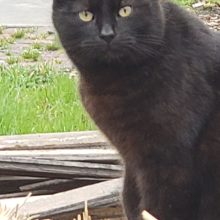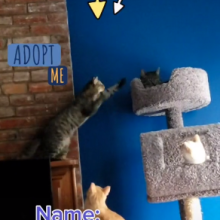

This colony sprang to life before roads were paved or houses built, when the confluence of waterways, plentiful food, and the lush green life by the riverside flourished in this region. We are told that domestic cats arrived with colonizers, they were not native to these lands. But people were. Some of those people had important relationships with the larger wild cats that are native to these lands. Not all.
We have no way to know when the first domesticated cat arrived here, but surely it was during the very earliest years of colonization. Still, we can’t know.
Over time, footpaths became rutted wagon trails as Manchester was colonized by Europeans. Then came buildings, especially houses. Laid out in 1832 and established as a borough in 1843, named after its English counterpart, it developed as a suburb of Allegheny City. Manchester was annexed by Allegheny City in 1867 and then by Pittsburgh in 1907, becoming part of the larger city. I got that from AI.
Suburbs and city neighborhoods came with many housewives juggling domestic tasks with family obligations, an economy where everyone must pull their weight, even the cat.
In my minds eye, the housewives and keepers of all genders forged a mutually beneficial partnership with their domestic critters – dogs would guard and hunt, hens would lay eggs, and cats? Cats would control pests and vermin near the house, the outhouse, and whatever yard was there. In exchange, all received some food, maybe a warm place to sleep by the fire. Too romantic? Maybe.
But I think it makes sense that ‘cat ladies’ or cat folx as I prefer to identify them had a nuanced relationship with their animals, transactional and interpersonal? Not everyone. Maybe.
This wouldn’t be limited to just caretakers living in colonizer housing. That’s one reason we use ‘cat folx’ – to capture the racial, ethnic, gender, and other diverse nuances of people who care for cats. And to challenge the stereotypes around any group of people’s interactions with cats.
But here in Manchester, a special reality revealed itself – an opening between the continuum of time and space. I call it a portal,one that brought lost and homeless cats to Fort Faulsey.
Let’s go back to 1970, the year I was born. Mr. B of 1418 Page St passed in April. His wife, MJ, continued to live there until her death in 2001.
She took care of the cats. She cared for the cats. She reportedly had a connection to the cats. When she passed, I imagine them grieving, keening and singing her into the next world.
For nearly 24 years, the house had no human occupants – but generation after generation of cats remained, alongside groundhogs, possum, raccoons, even the occasional deer. They survived. Sometimes a neighbor fed them. Mostly they kept the secrets. Her clothes still hung in the old kitchen/bathroom. A tremendous pile of catfood bags had accumulated in the living room, evidence of previous kindness. Time stood still around the portal.
The house was a silent testimony to MJ and others like her, they were part of the fabric of Manchester as much as any owner of a grand Victorian home. MJ didn’t let her house fall into disrepair – the owners did that. And the City, after she died. Housing should be preserved so people can live in it.
In December 2020, three kittens drew the attention of their neighbors, kind people who fed them. They scrambled when their jobs took them to New Zealand. That’s where we came in. The couple’s coworker is a friend who asked us to help feed the cats while they figured it out.
Five years later …
We cared for three seeming littermates. More popped up. We offered canned food, clean water and shelters. They ate under a very old pickup truck, dumped their food on the ground and ignored us. We did some TNR.
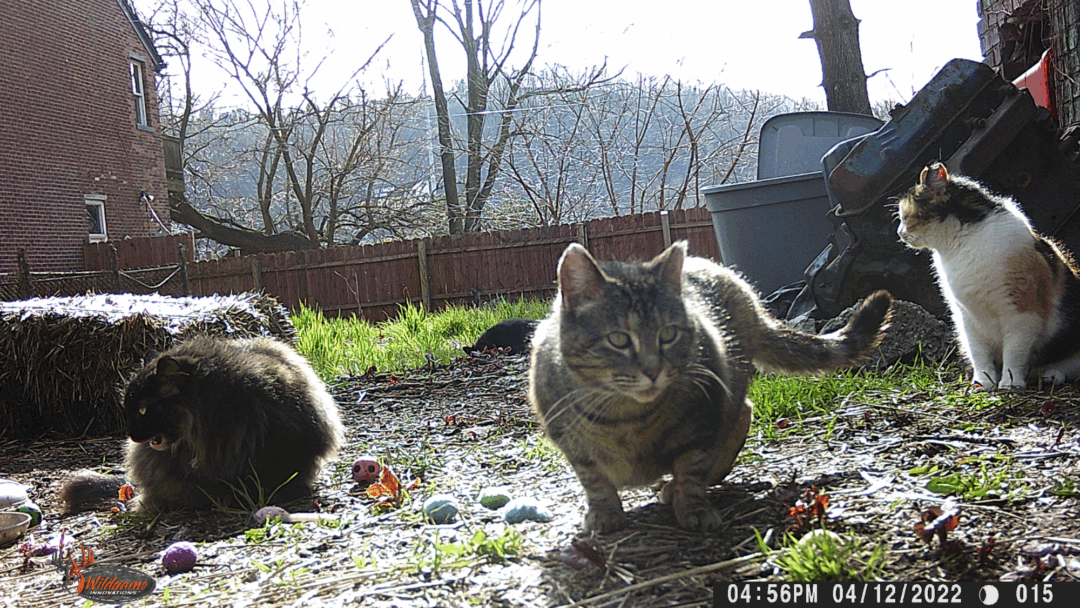
Then we noticed the portal. First it was Buddy, a cat who escaped from the Wendy’s parking lot during an exchange. He made it across a busy street to our feeding station, then into my trap. And home.
Diddy went on the lam from the nearby rescue’s parking lot. He hung out at the Fort for awhile, then made his way across a busy streeet where he befriended a little boy. His owner came and Diddy jumped into his arms.
There was Ginger Snap. Gingey. Onyx is the cat of MJ’s descendant. True story.
So many stories, so many tails. See what I did there?
The current residents are five in number. No kittens. Our current focus is getting two of them (Callie and Oksana) dentals. That’s at least $2000. But essential.
We originally thought Kirk and Pretty Girl were siblings and Callie was their mother based on anecdotal information. But the medical science information from their TNR’s showed the was not possible based on their estimated ages. Rather than create family trees, they built a colony to survive together. Untangling would be impossible and unneccessary.
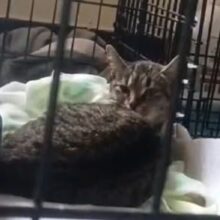
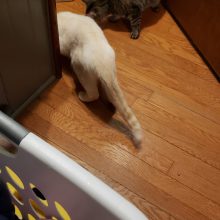
I’ve documented their stories and ours as we became more intertwined. Dip into these photos.
Snowy March Night 2022 at Fort Faulsey
February 2022 at #FortFaulsey – a community #cat colony
A Snowy Spring Night at a Pittsburgh Community Cat Colony
A Chilly March Night at Fort Faulsey Community Cat Colony
One Night at the Feeding Station
Fort Faulsey 2023 – a cat colony on the Northside of Pittsburgh
Colony Cats – help w TNR costs Venmo, CashApp PayPal @Pghlesbian
Fort Faulsey – a cat colony on Pittsburgh’s Northside
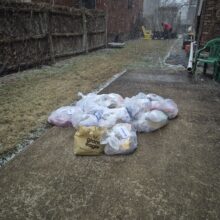
I captured a very big moment in Fort Faulsey’s recent history with this video clip of the destruction of their home.